Thursday, January 5, 2023

:::: FILMS OF 2022 ::::


TOP FILMS OF 2022 IN NO PARTICULAR ORDER
-----------------------------------------------------------
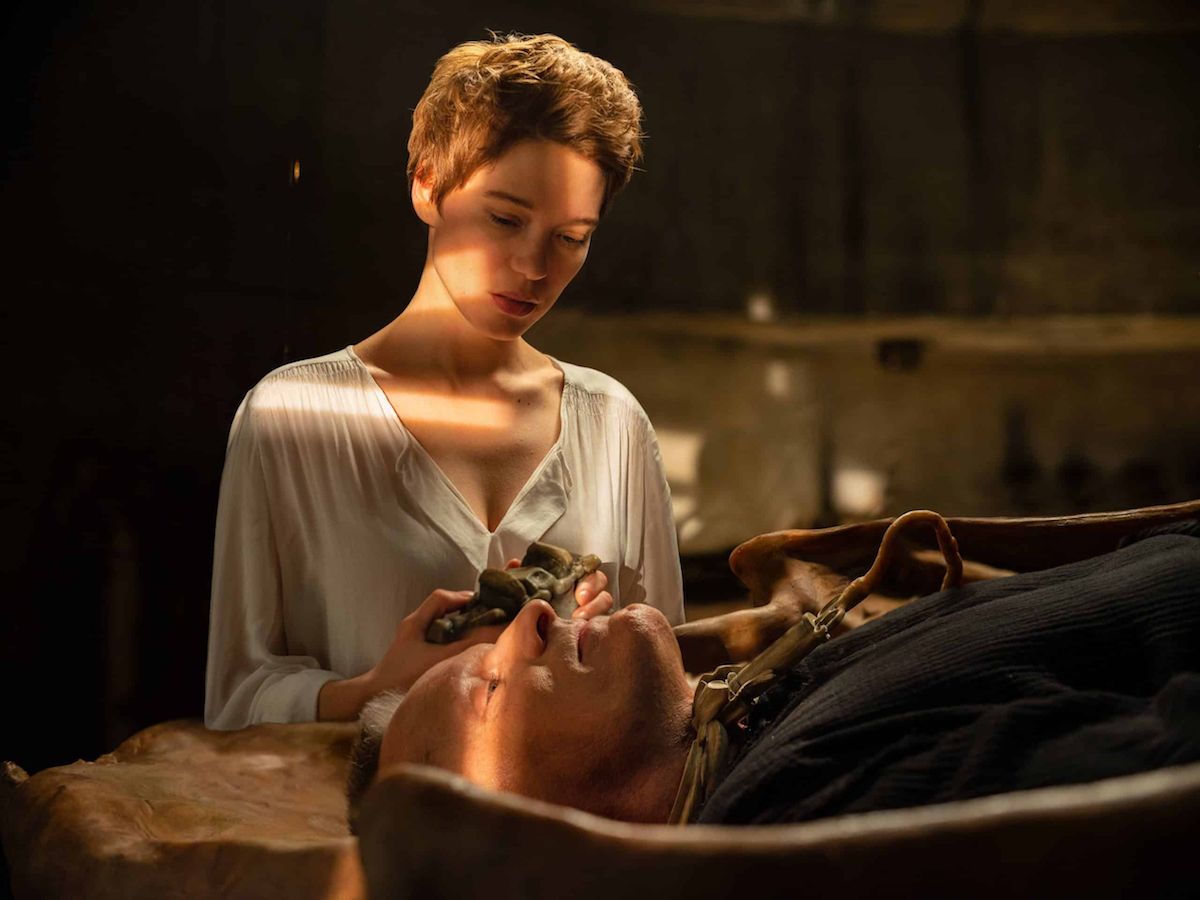
Gaspar Noé  "Vortex"  (France)
Charlotte Wells  "Aftersun"  (United Kingdom)
Brett Morgen  "Moonage Daydream"  (United States)
Luca Guadagnino  "Bones and All"  (Italy)
David Cronenberg  "Crimes of the Future"  (Canada)
Andrew Dominik  "Blonde"  (United States)
Claire Denis  "Stars at Noon"  (France)
Joanna Hogg  "The Eternal Daughter"  (United Kingdom)
Albert Serra  "Pacifiction"  (France/Spain)
Michelangelo Frammartino  "Il Buco"  (Italy)
Alejandro Iñárritu  "BARDO, False Chronicle of a Handful of Truths"  (Mexico)
Edward Berger  "All Quiet on the Western Front"  (Germany)
Mia Hansen-Løve  "One Fine Morning"  (France)
Bruno Dumont  "France"  (France)
Sebastien Meise "Great Freedom"  (Austria)
Marie Kreutzer  "Corsage"  (Germany)
Jerzy Skolimowski  "EO"  (Poland)
Park Chan-wook  "Decision To Leave"  (South Korea)
Alessio Rigo de Righi & Matteo Zoppis  "The Tale of King Crab"  (Italy)
Mia Zetterling  "Four Films by Mia Zetterling"  Restored Rereleased (Sweden)
Mark Jenkin  "Enys Men"  (United Kingdom)
Todd Field  "TÁR"  (United States)
Lucile Hadžihalilović  "Earwig"  (France)
Olivier Assayas  "Irma Vep 2022"   (France)
Panos Cosmatos  "The Viewing"  Short  (Canada)
 
For decades this annual entry has acted as an overview of music, dance, theatre and performance art attended, films seen in the cinema, visual art exhibitions and fairs, festivals covered, and international and domestic destinations traveled. Due to the ongoing effect of the global coronavirus pandemic, this year's overview will again be somewhat limited in scope. While now in its waning phases, its effect on cultural and social life is still a dominant factor. Businesses and cultural venues have limited hours, close early on weekday and weekend nights, and continue to program with a reduced scale and truncated durations over what we saw in the years preceding the pandemic. Even the most rudimentary of social meeting spaces such as cafes, bars and restaurants continue to have reduced hours. The once essential component of urban social life in the Northwest, the cafe, has been particularly hard hit. With many of them no longer offering evening hours. Regionally, arts venues and cultural institutions returned to in-person programming in fall of 2021, cautiously opening the doors to music stages, galleries and movie houses. After a year and a half of navigating the complexities of the pandemic restrictions and closures, programming returned in August and September to the majority of these Northwest culture spaces. In many cases their future remained uncertain until relief funding became available just earlier that year with the benefits of the Save Our Stages Act, alongside the newly implemented Shuttered Venues Grant. The benefits of the various pandemic relief bills, alongside regional infrastructure like the 4Culture Relief Fund, awareness efforts like the Washington Nightlife Music Association, crowdfunding and philanthropy like the ArtistRelief, ArtsFund grant, and GiveBig Washington, all came in the 11th hour for many of our regional cultural institutions and art venues.

Overseas, the European continent has rebounded in a more decisive and assertive way, with the major festivals and exhibitions returning to both bold, and pandemic conscious, in-person programming. One can clearly see the nature of commerce, and social and cultural life at all the hours that one can imagine them transpiring, have made a more lively and vital recovery from the pandemic. This was evident in traveling overseas for the first time in almost three years to attend the once-a-decade confluence of Germany's Documenta, and the Venice Biennale. This year's particular convergence of the two offered a complex set of groundbreaking firsts, as well as an unexpected set of socio-cultural setbacks. With the initial launch not going to plan, Documenta 15 found itself in a set of novel complexities, being curated by a leaderless collective, there was a "The Bumpy Road to a Group-led Documenta”. In many ways the exhibition was a success, “Welcome to the Fun House! Sharks, Skaters, and Smelters liven up Documenta 15”, yet it found itself at the center of a wider discussion and controversy, "Documenta Was a Whole Vibe. Then a Scandal Killed the Buzz". At the close of September, there was much discussion about the resulting impact, and wider considerations to the exhibition, some even speculating, "The World’s Most Prestigious Art Exhibition Is Over. Maybe Forever.". The 59th Venice Biennale was afflicted by no such troubles. This year’s big group show, "The Milk of Dreams", curated by Cecilia Alemani, took its title from an early 20th century fairytale by the British-born Leonora Carrington. The era was also at the heart of the concurrent surrealism blockbuster at the Peggy Guggenheim Foundation in Venice's Dorsoduro. Including the 56 national pavilions and over 30 collateral events, the resulting citywide exhibition produced a smorgasbord of late-flowering surrealism. In what was being called the women's Biennale, this year's exhibition was an exuberant set of, “Cyborgs, Sirens, and a Singing Murderer: The Thrilling, Oligarch-free Venice Biennale”. In an almost singular historic moment, with the world recovering from the pandemic, and the Ukraine being pummeled by Russian missiles, there was no shortage of, “Looking Inward, and Back, at a Biennale for the History Books”.

Returning home domestically, life was reduced again to grappling with the larger part of one's existence being spent in our homes these past two years. While there are now opportunities again to engage with film, music and visual art, as a culture we are still relying on online resources more than was necessary pre-pandemic. Yet these deliver only a modicum of the sensations, social engagement, and sensory thrills and satisfactions of cultural happenings. The pragmatic response would be to accept the inherent losses and embrace what vestiges of a cultural life that could be salvaged online. Yet these are poor surrogates, even temporarily. So, while its role may be reduced in the age of streaming, the magazine, both print and digital, can still be a defining tastemaker amid the multitude of channels in which to discover new music. For those not finding compelling sounds via their internet trawls, digital retailers like Boomkat, and online institutions like The Quietus, represent the kind of expertise you’ll not find coherently brought together online outside the framework of such vision and curatorial legacy. Evolving right along with the times from a free improv, modern classical and jazz magazine in the 1970s and 1980s, in the following decades The Wire expanded its scope to include every imaginable genre (and some yet invented), becoming all-inclusive by the conclusion of the 20th century. A particular advantage at year's end, is that the magazine offers the opportunity to Listen to The Wire Top 50 Releases of 2022. Similarly, film institutions like those below offer a worldly scope, compiling the life’s work of people who have made watching their enterprise. Year in and year out again, Sight & Sound, Film Comment, Cinema-Scope, Criterion Collection's The Current, and The Guardian's excellent film coverage have brought focus to the year of moving pictures from around the globe.

:::: ALBUMS OF 2022 ::::


TOP ALBUMS OF 2022 IN NO PARTICULAR ORDER
-------------------------------------------------------------
Various Artists "Nyege Nyege Tapes: USB Bomb" (Nyege Nyege Tapes)
Oren Ambarchi, Johan Berthling & Andreas Werliin "Ghosted" (Drag City)
The Comet Is Coming "Hyper-Dimensional Expansion Beam" (Impulse!)
Various Artists "Send The Pain Below" (Flenser)
Kali Malone "Living Torch" (GRM)
Lucrecia Dalt "!Ay!" (RVNG)
Nils Frahm "Music For Animals" (Leiter)
Blood Incantation “Timewave Zero” (Century Media)
JK Flesh “Sewer Bait” (Pressure)
Moor Mother “Jazz Codes” (Anti-)
Makaya McCraven "In These Times" (Nonesuch)
Ash Ra Tempel "Schwingunen" & "Join Inn" Reissues (MG.Art)
Alabaster DePlume "Gold: Go Forward in the Courage of Your Love" (International Anthem)
Harold Budd "The Pavilion Of Dreams" Reissue (Superior Viaduct)
David Bowie "Moonage Daydream: A Film by Brett Morgen" Soundtrack (Parlophone)
Alice Coltrane with Pharoah Sanders & Joe Henderson "Ptah, The El Daoud" Reissue (Impulse!)
Igor Stravinsky "Jurowski Conducts Stravinsky: The Rite of Spring" (London Philharmonic Orchestra)
Various Artists "Silberland Vol.1: The Psychedelic Side of Kosmische Musik 1972-1986" (Bureau B)
Charles Koechlin "The Seven Stars Symphony / Vers la Voûte étoilée" (Capriccio)
Heiner Goebbels & Ensemble Modern "A House of Call" (ECM)
The Lovecraft Sextet "Nights Of Lust" (Denovali)
Sarah Davachi "Two Sisters" (Late Music)
Širom "The Liquified Throne of Simplicity" (tak:til)
Drowse "Wane Into It" (Flenser)
Pan Daijing "Tissues" (PAN)

For decades this annual entry has acted as an overview of music, dance, theatre and performance art attended, films seen in the cinema, visual art exhibitions and fairs, festivals covered, and international and domestic destinations traveled. Due to the ongoing effect of the global coronavirus pandemic, this year's overview will again be somewhat limited in scope. While now in its waning phases, its effect on cultural and social life is still a dominant factor. Businesses and cultural venues have limited hours, close early on weekday and weekend nights, and continue to program with a reduced scale and truncated durations over what we saw in the years preceding the pandemic. Even the most rudimentary of social meeting spaces such as cafes, bars and restaurants continue to have reduced hours. The once essential component of urban social life in the Northwest, the cafe, has been particularly hard hit. With many of them no longer offering evening hours. Regionally, arts venues and cultural institutions returned to in-person programming in fall of 2021, cautiously opening the doors to music stages, galleries and movie houses. After a year and a half of navigating the complexities of the pandemic restrictions and closures, programming returned in August and September to the majority of these Northwest culture spaces. In many cases their future remained uncertain until relief funding became available just earlier that year with the benefits of the Save Our Stages Act, alongside the newly implemented Shuttered Venues Grant. The benefits of the various pandemic relief bills, alongside regional infrastructure like the 4Culture Relief Fund, awareness efforts like the Washington Nightlife Music Association, crowdfunding and philanthropy like the ArtistRelief, ArtsFund grant, and GiveBig Washington, all came in the 11th hour for many of our regional cultural institutions and art venues.

Overseas, the European continent has rebounded in a more decisive and assertive way, with the major festivals and exhibitions returning to both bold, and pandemic conscious, in-person programming. One can clearly see the nature of commerce, and social and cultural life at all the hours that one can imagine them transpiring, have made a more lively and vital recovery from the pandemic. This was evident in traveling overseas for the first time in almost three years to attend the once-a-decade confluence of Germany's Documenta, and the Venice Biennale. This year's particular convergence of the two offered a complex set of groundbreaking firsts, as well as an unexpected set of socio-cultural setbacks. With the initial launch not going to plan, Documenta 15 found itself in a set of novel complexities, being curated by a leaderless collective, there was a "The Bumpy Road to a Group-led Documenta”. In many ways the exhibition was a success, “Welcome to the Fun House! Sharks, Skaters, and Smelters liven up Documenta 15”, yet it found itself at the center of a wider discussion and controversy, "Documenta Was a Whole Vibe. Then a Scandal Killed the Buzz". At the close of September, there was much discussion about the resulting impact, and wider considerations to the exhibition, some even speculating, "The World’s Most Prestigious Art Exhibition Is Over. Maybe Forever.". The 59th Venice Biennale was afflicted by no such troubles. This year’s big group show, "The Milk of Dreams", curated by Cecilia Alemani, took its title from an early 20th century fairytale by the British-born Leonora Carrington. The era was also at the heart of the concurrent surrealism blockbuster at the Peggy Guggenheim Foundation in Venice's Dorsoduro. Including the 56 national pavilions and over 30 collateral events, the resulting citywide exhibition produced a smorgasbord of late-flowering surrealism. In what was being called the women's Biennale, this year's exhibition was an exuberant set of, “Cyborgs, Sirens, and a Singing Murderer: The Thrilling, Oligarch-free Venice Biennale”. In an almost singular historic moment, with the world recovering from the pandemic, and the Ukraine being pummeled by Russian missiles, there was no shortage of, “Looking Inward, and Back, at a Biennale for the History Books”.

Returning home domestically, life was reduced again to grappling with the larger part of one's existence being spent in our homes these past two years. While there are now opportunities again to engage with film, music and visual art, as a culture we are still relying on online resources more than was necessary pre-pandemic. Yet these deliver only a modicum of the sensations, social engagement, and sensory thrills and satisfactions of cultural happenings. The pragmatic response would be to accept the inherent losses and embrace what vestiges of a cultural life that could be salvaged online. Yet these are poor surrogates, even temporarily. So, while its role may be reduced in the age of streaming, the magazine, both print and digital, can still be a defining tastemaker amid the multitude of channels in which to discover new music. For those not finding compelling sounds via their internet trawls, digital retailers like Boomkat, and online institutions like The Quietus, represent the kind of expertise you’ll not find coherently brought together online outside the framework of such vision and curatorial legacy. Evolving right along with the times from a free improv, modern classical, and jazz magazine in the 1970s and 1980s, in the following decades The Wire expanded its scope to include every imaginable genre (and some yet invented), becoming all-inclusive by the conclusion of the 20th century. A particular advantage at year's end, is that the magazine offers the opportunity to Listen to The Wire Top 50 Releases of 2022. Similarly, film institutions like those below offer a worldly scope, compiling the life’s work of people who have made watching their enterprise. Year in and year out again, Sight & Sound, Film Comment, Cinema-Scope, Criterion Collection's The Current, and The Guardian's excellent film coverage have brought focus to the year of moving pictures from around the globe.

Sunday, December 18, 2022

Joanna Hogg's “Eternal Daughter”, Noah Baumbach's "White Noise”, Laura Poitras “All the Beauty and the Bloodshed”, Jerzy Skolimowski's “EO” and Hirokazu Kore-eda's “Broker” at Landmark Theatres, SIFF Cinema, Northwest Film Forum & The Grand Illusion: Dec 9 - Jan 6


The month of December sees titles from this year's Venice Film Festival, alongside latecomers from the Cannes and Toronto festivals continuing to arrive in Northwest theaters. Among the films from Venice, there are few more heatedly anticipated than Noah Baumbach's adaptation of Don DeLillo's novel, “White Noise”, and the Golden Lion award-winner from Laura Poitras, on the life, art and advocacy Nan Goldin, portrayed in “All the Beauty and the Bloodshed”. The award winning film plumbs the heights and depths of the artist's life, and her later dedication to personal and social causes, on which she spoke at length with The Guardian, "Artist Nan Goldin on Addiction and Taking on the Sackler Dynasty". Other late arrivals from Cannes and Venice at SIFF Cinema include “Broker", the first of Japanese auteur Hirokazu Kore-eda's films set in Korea, Darren Aronovsky's rumination on the human condition, “The Whale”, and Jerzy Skolimowski's homage to Robert Bresson and Béla Tarr, told through its non-human protagonist, “EO”. The Skolimowski film has already garnered high placement on many films of the year lists, including the Los Angeles Times declaring, "‘EO,’ A Gorgeous Portrait of a Donkey, is the Movie You’ve Been Praying For", and Manohla Dargis' exuberant review for the New York Times, "‘EO’: Imagining the Lives of Other Creatures". Northwest Film Forum presents another recent entry in Korean director Hong Sang-soo's autobiographical meta-observations in the “Novelist’s Film”, and The Grand Illusion Cinema will screen Tilda Swinton in a haunting double role, as Joanna Hogg's “Eternal Daughter". This eerie tale of a "Double Tilda Swinton Haunts Joanna Hogg Ghost Story" follows on the heels of her two-part masterwork that topped many films of the decade lists, comprising "The Souvenir", and its second installment. Later in the month at the AMC theatres come the intimate portrait of childhood seen in Lukas Dhont 's “Close" and the most recent period drama Corsagefrom Marie Kreutzer. The latter, what Peter Bradshaw calls an austere and inventive film depicting, "A Cry of Anger from the Pedestal-Prison of An Empress". Concluding the month for a second run at SIFF Cinema, Charlotte Welles' masterful Cannes debut feature "Aftersun" returns to cinemas. This emotionally piercing film watches as a beautifully understated yet emotionally riveting coming-of-age "Luminous Father-Daughter Drama", that is both brilliantly assured and stylistically adventurous. Also returning for a second run, Todd Field's classical music world drama "TÁR", in which "Cate Blanchett is Colossal as a Conductor in Crisis". Through the course of this exceedingly credible depiction of the classical music world, the life of a composer and conductor of a major German orchestra comes unravelled as her highly principled and equally duplicitous life is laid bare. In more ways than one, "In 'TÁR', a Maestro Faces the Music".

Sunday, December 11, 2022

Darwyn Cooke's Golden Age of Superheroes & "The Lost Opportunity of The New Frontier" | Forbes


A decade has elapsed since the New 52 marketing campaign, and DC Comics continue to find themselves caught in the throes of the worst of flash-in-the-pan commercial gimmicks and redundant reboots. These have been rolled out as an endless cavalcade of corrective measures to adjust from the previous misguided realignment of their properties, only to find themselves back at square one, and with an ever-diminishing readership. All of this done at the imperative of their various marketing and editorial branches (beholden to Warner Brothers), over the benefits of trusting in their artist and writer teams to build substantial storytelling within their fictional universes. In the long term, this will be their loss. Readership will go where talent, creativity, and the rich rewards of artists who are invested in the depth and value of their work is not only appreciated, but the desired objective of the publisher. Over the last decade, the 'big two', being Marvel and DC respectively, have sacrificed the last vestiges of these values in an series of illusory market grabs, under the auspice of lining their pockets. But the numbers have clearly stated otherwise, with readership continuously down since the mid-2010s. But it needn't have been this way. DC Comics themselves had invested in talent and a number of artists and writers at the beginning of that decade, looking to enrich their enterprises with the vitality and energy of independent comics properties of the millennial cusp. Among them, the "The New Design Frontiers of Darwyn Cooke’s Comic Book Art", enhanced a small run of titles with their fresh graphic identity and a more modern, urban, adult sensibility. The Eisner Award-winning comic writer and artist was paired with another contemporary in his field, noir and crime comics author Ed Brubaker, for their bold revamping of the Catwoman character. This pairing was the result of Brubaker's critically hailed and Harvey and Eisner award-winning work on the police procedural comic "Gotham Central", and their shared passion from crime fiction and film noir, which Cooke spoke at length on in the 2007 "The Comics Journal: Darwyn Cooke Interview". Within a span of just a few years, both authors would then leave Marvel and DC, never to return to produce a major work for them, but instead finding longterm residency in the more fertile soil of independent publishers such as Image and IDW. Around this period, Cooke shared his views on where the industry had gone astray, "Darwyn Cooke Gets Honest about 'Before Watchmen'' wherein he detailed the disenfranchising environment of misaligned priorities being handed down by editorial and the overarching corporate bodies of Disney and Warner Brothers.

But this departure was not before Darwyn Cooke delivered one unmitigated and great superhero property for DC, in the form of 2004's "DC: The New Frontier". The story, set in primarily in the 1950s, featured dozens of DC characters and drew inspiration from the Golden and early Silver Age period's comic books, pulp fiction, and cinema, as well as its structure from Tom Wolfe's non-fiction account of the start of the U.S. space program "The Right Stuff". As with much of Cooke's work, it also pulled from the gritty crime fiction of the era, particularly that of James Ellroy, due to the author's penchant for weaving fictional characters into the tapestry of his historic settings. In this way, the major DC characters are introduced in "The New Frontier" in the same manner as their original conception, but with a freshly postmodern outlook on the real world pre-and-post war era, and its social and political concerns. Detailed in Under the Radar's "Darwyn Cooke, Creator of Justice League: The New Frontier" interview, Cooke describes the book's accompanying visual style, which took inspiration from 1950s advertising, album cover, film poster and graphic art, along with the early Marvel works of Jack Kirby, and the 1960s Hanna-Barbera creations of Alex Toth. On the eve of Darwyn Cooke's untimely death in 2016, and the book's reprinting in a new deluxe edition, Forbes pop culture and comics writer Rob Salkowitz published his thoughts in "The Lost Opportunity of The New Frontier"; "Darwyn Cooke's masterpiece offered DC a way to embrace its brand-defining Silver Age legacy without seeming corny or outdated, and welcome new fans into the mythos without driving away long-time readers. The 2004 mini-series that sets the origin of the DC universe in the optimistic era of the early 1960s is not only a complete triumph of the superhero genre, but also a story that could have solved many, many problems for DC here in the 21st century. Instead, we got Zack Snyder's "Batman v. Superman". If the company had been looking for a reset button to bring in new fans without driving old ones away in disgust, "The New Frontier" could have been a useful starting point. Today it’s a curiosity. The Democratic National Convention of the early 60s recognized that, at a moment when competition is fierce, your brand is tarnished and the world seems to be going a different direction, there are worse strategies than to restate your ideals with vigor and hope, not fear and confusion. When a visionary gifts you with a path forward, you should take it."

Thursday, December 1, 2022

Luca Guadagnino's “Bones and All” at SIFF Cinema: Nov 22 - Dec 15


Filmgoers familiar with the director's breakout 1980s period romance, "Call Me by Your Name", can attest to his artistry and the sumptuous, corporeal, physical attributes of, "Luca Guadagnino's Cinema of Desire". Among the array of sensory craft on display in the film, the soundtrack offers an almost baroque reinforcement of the Italian coastline's rapturous beauty. Yet, like the mildly feverish fantasia of "A Boy’s Own Desire in ‘Call Me by Your Name’", passions of mind and heart bear influence over the following tumult, sorcery, and inner and outer conflicts of his following remake of "Suspiria". This is both apparent in the film's sound design as well as the prominent role Radiohead's Thom Yorke is given in his score for the film. An audiovisual banquet, it also watches as a showcase for the cinematography of Sayombhu Mukdeeprom, known for his award winning collaborations with Thai arthouse auteur, Apichatpong Weerasethakul. By setting his adaptation in a concretely placed sociopolitical setting, and a witchily uncanny eye for references within modern dance, Guadagnino's film offered a very different, and deeply melancholic, point of entry into the nightmare of The Three Mothers. And it is between these two points of reference that we find his Venice Film Festival shocker, with an aesthete's obsessive fixation on the sensory that Luca Guadagnino delivers his most sympathetic and carnal vision to date. This "extravagant and outrageous movie; scary, nasty and startling in its warped romantic idealism" as Peter Bradshaw calls it in the pages of The Guardian, delivers its viewers a, "Cannibal Romance that is a Heartbreaking Banquet of Brilliance". Enhanced by the talent of its cinematographer, Arseni Khachaturan, and another of Guadagnino's explicit choices in music by Trent Reznor and Atticus Ross, this is  a very different tale about a flesh-eating compulsion than those that have been made popular in recent prestige television. Nor is it another young adult exploration of youthful rebellion, marginalization, or the outsider status of a subset of identity politics, contrary to what audiences might conclude from the casting of its young stars. It is instead a finely tuned fusion of genres, that finesse a deeply sympathetic perspective on the grotesque. In "Bones and All" Guadagnino has tangibly crafted a film that burns with a shame and brand of desperation, born of poverty and homelessness and the tragedy and ruthlessness of survival. Yet underlying these earthly concerns, is a dreamlike pull that somehow both nourishes and cleanses away the horror.

Thursday, November 10, 2022

Alejandro Iñárritu's "BARDO, False Chronicle of a Handful of Truths", Charlotte Welles' "Aftersun", Todd Field's "TÁR", Amanda Kramer's “Please Baby Please”, Luca Guadagnino's “Bones and All” and Ali Abbasi's “Holy Spider” at Landmark Theatres, SIFF Cinema, Northwest Film Forum & The Grand Illusion: Oct 28 - Dec 8


A substantial offering of the significant titles from this year's Cannes Film Festival, alongside films from this year's Venice, and Toronto festivals have finally arrived in Northwest theaters this month. Among them, Park Chan-Wook's Cannes award winning, "Decision to Leave" at both SIFF and Northwest Film Forum, is the South Korean director's most explicit homage to Hitchcock's cinematic labyrinth of obsession and desire. Fresh from Venice, Todd Field's Cate Blanchett-led classical music world drama "TÁR", currently at the AMC chain, watches as a convincingly authentic and tightly-wound character assasination. Also at the AMCs straight from Venice and Cannes, is the intimate portrait of childhood from Lukas Dhont in “Close" and the most recent period drama Corsagefrom Marie Kreutzer. From both Rotterdam and Berlin, we get the mashup of musical genre film set in a world not far removed from that of Kenneth Anger, in Amanda Kramer's “Please Baby Please” and the return of Ana Lily Amirpour after her cult hit vampire film, with “Mona Lisa and the Blood Moon”, both at The Grand Illusion. Also straight from Venice, SIFF Cinema is currently running both Luca Guadagnino's science fiction cannibalistic road movie, “Bones and All”, alongside another of the big films from Venice, Martin McDonagh's bruised fraternal drama, "The Banshees of Inisherin". Currently at SIFF one of the major winners from Cannes, the contentious Palme d'Or awardee "Triangle of Sadness" from the mind of Ruben Östlund may or may not be worthy of the accolades, but it certainly entertains in its comedic sadism. Showing at Northwest Film Forum and SIFF Cinema, two of the century's great documentarists Patricio Guzmán and Frederick Wiseman have new works which screened in Toronto, Cannes and Venice, with "My Imaginary Country" and A Couple. Seattle's last remaining Landmark Theatres, The Crest, will be screening Edward Berger's unrelenting and intimate adaptation of Erich Maria Remarque's novel All Quiet on the Western Front”, as well as Charlotte Welles' masterful Cannes debut feature "Aftersun", and James Gray's 1980s Manhattan-set childhood drama, “Armageddon Time”. From Toronto, The Crest is also hosting Sebastián Lelio's “The Wonder”, and straight from Venice comes "BARDO, False Chronicle of a Handful of Truths", the wildly kinetic new film from Alejandro González Iñárritu. SIFF Cinema presents two late comers from Cannes, with Mario Martine's “Nostalgia” showing in their Cinema Italian Style series, and Ali Abbasi's best actress award-winning “Holy Spider”, arriving at the tail end of November.

Thursday, November 3, 2022

Park Chan-wook's "Decision to Leave" at SIFF Cinema & Northwest Film Forum: Oct 21 - Nov 10 & Oct 28 - Nov 23


A return to form was seen in Park Chan-wook's 2016 resetting of "Fingersmith" by Welsh writer Sarah Waters. In his hands the director of international breakout hits like "Old Boy" distorted and warped the text into his own "The Handmaiden" through numerous perspectival shifts, abundant voyeurism, and academic eroticism. Often told in the form of theatrical readings of Shunga illustrated erotica, "Park Chan-wook Returns with an Erotic Romance, Con-artist Story and Period Piece". The film's further assimilation from the vocabulary of the thriller and it's suspense built from an atmosphere of rich and erotic textures, found the director even more firmly in Hitchcock territory than usual, as discussed at length in interview with FilmStage, "Park Chan-wook Talks ‘The Handmaiden,’ Male Gaze and Queer Influence". Similarly, this year's Cannes award-winning film from the director unabashedly delves into crime thriller territory, with more than a slight resemblance in its uneven terrain and abundant twists, to Aflred Hitchcock's 1958 masterpiece. Yet "Decision to Leave" at SIFF Cinema and Northwest Film Forum this month and on Mubi this coming winter, distinguishes itself as Park's own particular brand of 21st century romantic thriller. All the while, "Park Chan-wook’s Thrilling Mystery is Noir at its Most Nourishing", offering richly satisfying points of genre reference making for a modern work within an established form. But in this case, it's precisely the protagonist detective, Hae-joon's investigative skills, matched and mirrored by Park Chan-wook and his co-writer, Chung Seo-kyung, that result in the whole of the perspective being thrown off balance. Park Hai-il captures the steady unraveling of Hae-joon, and the viewer's perspective, with an intimacy that's all the more remarkable for being concealed behind a curt, efficient veneer. The personal and professional begin to blur as Hae-joon stakes out the home of murder suspect, Seo-rae, in an invasion of privacy that she amusedly acknowledges and even, in a sense, enticingly welcomes. And it is Seo-rae, as portrayed by Tang Wei, is the pivot around which the whole mystery turns, "Decision to Leave: Tang Wei Stuns in Park Chan-wook Black-widow Noir". If thoughts turn again to Alfred Hitchcock's "Vertigo", these associations aren't misplaced. through a number of elaborately staged scenes, the director unleashes a tide of associations and allusions to that particular psychological thriller; a surveillance subject that becomes a desire subject, a noir romantic template that resets and returns to itself halfway through, and in "Vertigo's" opening, a fall from a great height being central to both stories. Park Chan-wook has shown himself to have a flair for grandiose, and sometimes indulgent, stylistic flourishes, but here he has seized upon Hitchcock's aesthetics of voyeurism and obsession, and utilized these inclinations to better serve our journey through "Decision to Leave's Labyrinth of Desire".

Thursday, October 6, 2022

All Monsters Attack at The Grand Illusion Cinema: Oct 7 - Nov 3


To my mind, the months of October and November could always do with more in the way of programming around Halloween season genre film and its disorienting frights, crepuscular surrealism, and discomfiting atmospheres. Thankfully, Scarecrow Video annually steps up with their curated Halloween section of domestic and international horror, sci-fi, fantasy, and psychotronic selections. The Psychotronic Challenge also returns in its seventh installment, challenging viewers to select a new theme category for every day in October from the deep trivia of the cues on offer. While we're here, let's talk the incomparable one-of-a-kind resource that is Scarecrow, and how if you live in the Northwest and are a fan of cinema, it's essentially your personal obligation to ensure their doors stay open for business. For horror and genre aficionados, there is no other resource in North America like that offered by Scarecrow Video and their abundant catalog of obscure, foreign releases, out of print, and ultra-rare editions, and with nearly 150,000 films on offer, no singular online streaming resource can compare. In previous years, the annual citywide cinematic offerings for the months of October and November have seen a great set of films exploring desolate worlds, classic Japanese horror, a vampiric romaticism double feature and a night of music from a maestro of Italian horror. Also in the way of recent Halloween seasons of note, the local arthouse cinemas presented an abundance on the theme of the haunted house in 2015, and 2013 saw no small number of invaders from beyond. 2017 was heavy on 1970s psychedelic and psychological horror from Europe, particularly from the era of abundance seen in the subgenres of French Fantastique and Italian Giallo. 2018's programming was highly attuned to American 1980s horror, as was the case with the 2019 installment, alongside a bold mix of decades of classic European, Asian, and Italian genre material. Making a return after the long pandemic hiatus, 2021 also diversified with a strong set of films that never saw a theatrical release during the 2020 season.

One of the longest running, and most consistently satisfying of the local Halloween series has been The Grand Illusion Cinema's month-long All Monsters Attack calendar of horror, creature features, classic thrillers, sci-fi, and cult cinema. A highlight from last year's programming returns with a memorial night for Seattle's most dedicated cinephile, music lover, and man-about-town, William Kennedy. Before his passing in 2021, Bill wished for nothing more than his friends and cultural compatriots to join together for a screening of David Cronenberg's classic body-horror techno thriller, “Videodrome”. Two slices of celluloid magic from the black and white era are on the slate for the first week of programming, James Laughton's dreamily peculiar showcase for Robert Mitchum's malevolent preacher in "Night of the Hunter", and the slasher that birthed the genre, Alfred Hitchcock's "Psycho" in an extended cut. Switching modes to 1980s fare, there's Frank Henenlotter's absurd and excessive, "Brain Damage", and what might contestably be the greatest horror film of the decade, John Carpenter's audacious remake of "The Thing" from Another World. 1980s blockbuster fare can be seen in John McTiernan's Arnold Schwarzenegger vehicle, "Predator", and emerging from the Japanese cinema explosion of the 1990s, "Versus" put Ryûhei Kitamura on the map. A trio of diverse vampiric features are next on the slate; Francis Ford Coppola's slick and operatic 1990s hit "Bram Stoker's Dracula", the weighty atmosphere of F.W. Murnau's silent era "Nosferatu", and the sole directorial effort from child actor James Bond III, "Def by Temptation" which shares rarified company with films like Bill Gunn's single horror entry. Two long-running series at The Grand Illusion return with a VHS Über Alles double feature promising a night of Student Slasher Thrillrides from the Scarecrow archive only released on VHS, and The Sprocket Society present their usual array of rarities on 16mm. This year screening 1932's infamous "Freaks" by Tod Browning, alongside a secret pre-code shocker second feature, and a set of spooky shorts and cartoons. No Halloween season would be complete without a SATANAGEDDON! double feature presenting two ultra-rare 16mm slices of Satanic Panic-era madness. And rounding off the season, Italian horror and Giallo are essential components to the genre, and few have produced more entries in both than Lucio Fulci. Memorable for the tropical island setting of his "Zombie", also known as "Zombi 2", the film pairs the director with longtime collaborator Fabio Frizzi. In recent years the composer has toured his extended body of music made for the films of Fulci, particularly "The Beyond: Composer's Cut", which features Frizzi’s expanded score for the film, presented here in a new 4K restoration.

Sunday, October 2, 2022

The Criterion Channel Presents 30 Film 1980s Horror Showcase: Oct 1 | Genre Streaming for Cinephiles


Looking online this month for seasonal genre film offerings, Shudder remains the home for horror streaming. Their catalog alone could fill any avid viewer's calendar, and while it is more than a bit hyperbolic, Screenrant isn't too far wrong proposing "How Shudder Is Single-Handedly Keeping 2020 Horror Movies Alive". Don't overlook Shout Factory TV's lineup, and the excellent Arrow Films, and their genre imprint, Arrow Video, have also entered the game in recent years, inviting us to "Join the Cult: The Arrow Video Channel". Annually the online cinema that is Mubi offer up a selection of arthouse and deep cult cinema cuts on their platform spanning October. Such as the Trick or Flick: Halloween Horror showcase found in their Library section. But the true motherload can be found nestled in the bounty of The Criterion Channel's October lineup. Much like their previous 1970s Horror showcase of 2020, this year they dive deep into the explosion of the genre the following decade, with a showcase dedicated to the classic Universal Horror, Japan's kaiju king Ishiro Honda, a set of Vampire films, and a 30 title showcase of 1980s Horror. The latter seemingly taking a cue from Nick Pinkerton's Sight & Sound feature, and their "The Other Side of 80s America" focus on the decade of independent and genre cinema issuing from the United States. Concurrent with the pop culture revelry of Reaganite family-oriented dramas, action, teen movies, and sci-fi blockbusters, a more rebellious and independent strain of US movie making explored the darkness on the edge of mainstream society. Anne Billson's supporting article "A Nightmare on Main Street" plumbs the deeper realms of the decade's more assertively subversive low-to-medium budget genre fare, often “unburdened by notions of good taste". These manic explorations of class conflict, Cold War dread, ecological disaster and suburban paranoia defined a decade of cult film issuing from an era that was transgressive, politically voracious, and boundary-pushing. From the Criterion Channel; “The 1980s were defined by style and excess, and the era’s horror movies were no exception. Innovations in practical effects made the nightmares more vivid than ever, and thanks to the rise of home video, the call was now coming from inside the house. While established talents such as Dario Argento, Werner Herzog, John Carpenter, Tobe Hooper, Lucio Fulci, David Cronenberg, Michael Mann, Ken Russell, and Paul Schrader, brought terrifying spectacles to the screen, often with the help of Hollywood studios, home video opened up a new market that allowed the independents to take the genre to unexpected and—in the case of the UK’s censorship of infamous “Video Nasties”—controversial new heights. Curated by Clyde Folley, this ghastly tour through the decade of greed features ambitious art-pulp hybrids, a Hitchcock-inspired trucker movie, old-fashioned creature features, vampiric outsiders, Japanese punk cinema, astute political commentary, and absolutely unclassifiable cult oddities, bringing together some of the eighties’ most stylish, haunting, and outrageous visions.”