TOP FILMS OF 2015 IN NO PARTICULAR ORDER
-----------------------------------------------------------
Bruno Dumont "Li'l Quinquin" Theatrical Cut (France)
Myroslav Slaboshpytskiy "The Tribe" (Ukraine)
George Miller "Mad Max: Fury Road" (Australia)
Todd Haynes "Carol" (United Kingdom)
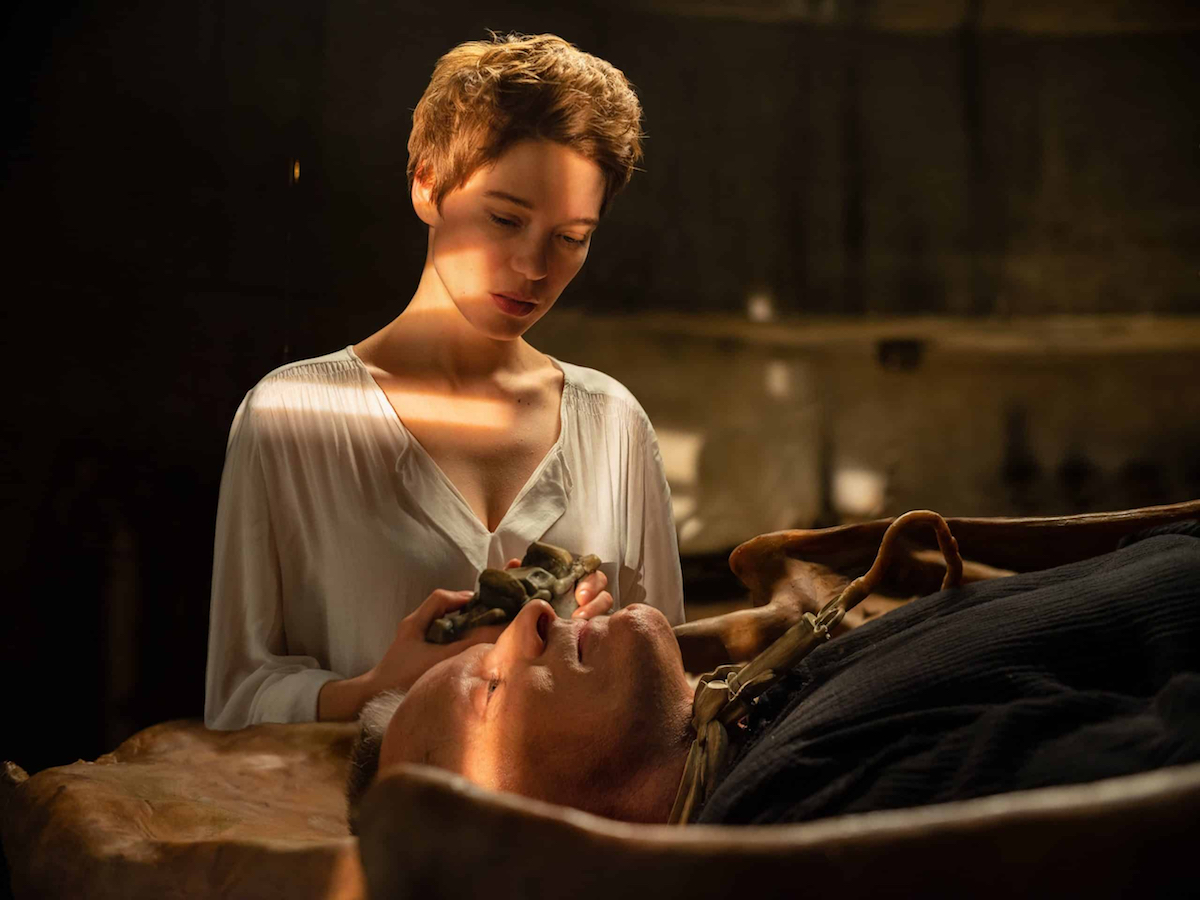
Alejandro Iñárritu "The Revenant" (United States)
Hou Hsiao-Hsien "The Assassin" (Taiwan / China)
Lav Diaz "From What is Before" (Philippines)
J.P. Sniadecki "The Iron Ministry" (United States / China)
Apichatpong Weerasethakul "Cemetery of Splendour" (Thailand)
Robert Gordon & Morgan Neville "Best of Enemies" (United States)
Alex Gibney "Going Clear: Scientology and the Prison of Belief" (United States)
Kinji Fukasaku "Battles Without Honor and Humanity" Rereleased (Japan)
Joshua Oppenheimer "The Look of Silence" (Indonesia)
Liliana Cavani "The Night Porter" Restored Rereleased (Italy)
František Vláčil “Marketa Lazarová” Restored Rereleased (Czech Republic)
Satyajit Ray "The Apu Trilogy" Restored Rereleased (India)
Tsai Ming-Liang "Journey to the West" (Taiwan)
Denis Villeneuve "Sicario" (United States)
Fabrice Du Welz "Alléluia" (Belgium)
Asghar Farhadi "About Elly" Rereleased (Iran)
Alice Rohrwacher "The Wonders" (Italy)
Christian Petzold "Phoenix" (Germany)
Michael Almereyda "Experimenter" (United States)
Pedro Costa "Horse Money" (Portugal)
Lisandro Alonso "Jauja" (Argentina)
Kiyoshi Kurosawa "Journey to the Shore" (Japan)
Guy Maddin & Even Johnson "The Forbidden Room" (Canada)
Nothing this year compared with the incontestable greatness of time spent in Europe this summer attending the
Okwui Enwezor curated “All the World’s Futures” and the
Venice Biennale. Adrian Searle offering an encompassing overview in the pages of The Guardian, "
Venice Biennale: The World is More than Enough", going on to include the city-wide exhibition in his
Best Art Shows of 2015. With Artforum's selections touching on the critically hailed pavilion by Joan Jonas: "
They Come to Us Without a Word". Returning from travel abroad it was a great relief to find engaging
festivals and exhibitions domestically. The inaugural Paul Allen funded
Seattle Art Fair, which taken with the collateral "
Out of Sight" exhibition proved to be significantly more than a wealthy man's vanity project. Particularly for it's inclusion of the "
Thinking Currents" wing with galleries and
media work from the Pacific Rim. Reflecting the
changing economic and
cultural landscape of
Seattle, two regional festivals with an international scope had closing and transitional years in 2015. Neoclassical, ambient and
electronic music
from around the globe gathered under the vaulted ceilings of the Chapel Performance Space for the final Northwest edition of Rafael Anton Irisarri's
Substrata Festival. And in an open letter Decibel Festival's 13th year closed with programming director
Sean Horton's farewell to the city. But not before
Autechre could deliver their three dimensional, hallucinogenic sonic sculptures in a sold-out festival setting as part of Decibel's
Resident Advisor Showcase. The epitome of what's come to be known as the
New Music movement largely centered around late 20th and 21st Century American composers,
Bang on a Can have "
A Quarter-Century Of Banging, and are Still as Fresh as Ever" when they came to Seattle's Moore Theater for this year's iteration of their daylong
marathon performance, including the quietly groundbreaking "
Music for Airports" by Brian Eno and Steve Reich's landmark "
Music for 18 Musicians". If you live on the west coast, this past year offered the possibly once-in-a-lifetime
touring retrospective of Hou Hsiao-Hsien's entire oeuvre. Screened in weeks-long series at Berkeley's
Pacific Film Archive, UCLA's
Billy Wilder Theater and without such prestigious academic support, The Grand Illusion
Cinema and Scarecrow Video combined forces with Northwest Film Forum
here in Seattle to present three weeks of, "
Also Like Life: The Films of Hou Hsiao-Hsien". As appraisals of the significance of his contribution to late 20th Century cinema, polls conducted by
Film Comment and
The Village Voice named Hou director of the decade, and in the overlapping 1998
worldwide critics' poll he was cited as one of three directors "most
crucial to the future of cinema". Yet it's the Museum of the Moving
Image, "
Hou Hsiao-Hsien: In Search of Lost Time" and their
symposium introduction that still stands as the most
succinct tacking of the paradox of this revered, yet rarely seen director.
For global cinema the digital age is still proving to be a narrow impasse rather than the promised plateau of abundance, which many are learning to navigate. Particularly evident in the world of film distribution, though footing has been found on some of the growing independent streaming platforms. Award
winning films from festivals in New York, Berlin, Vienna, Venice, Hong Kong, Seoul, Cannes,
Paris, London, Toronto and Cannes topping both
Film Comment and the British Film Institute's
Sight & Sound annual overviews have yet to screen in the United States, or even show up
released digitally online. So count yourself fortunate that you live in a international city if you
do, as more and more of the world's greatest film aren't to be found for purchase, rent, streaming
or even download (legal or otherwise). This year's
Seattle International Film Festival hosted a
less than memorable selection, many calling it the the weakest seen in nearly a decade, which was particularly disheartening after
the strong year that was the festival's 40th Anniversary. Their year-round programming at
SIFF Cinema compensating for the oversights of the festival, bringing advance screenings, rare prints and
numerous exclusive screenings to their three cinemas including the
Film Center and recently restored
Egyptian Theatre. Their second-run
Recent Raves series being the best thing SIFF had going until it's suspension at the end of this year. Here's hoping for it's return in 2016. With indie cinemas closing around the nation, it was that much more important to support the local theater
opportunities such as the
fast-shrinking and now halved Landmark Theatres,
Northwest Film Forum, and what's fast become the greatest programming seen on a screen in Seattle, The
Grand Illusion Cinema stepping up to fill the void after strengthening their
nonprofit partnership with Scarecrow Video. Many of the best films seen this year, when they did come to the theater, had runs that lasted no more than a week. Others were never to appear again outside of an initial festival screening. Again proving the wisdom of getting out there, seeing the city and prioritizing the remaining opportunities that we're fortunate to have in our urban crossroads. Even so, no mall percentage of these films even avid theater-goers living in urban centers didn't get to see. Making a resource like
Scarecrow Video, this
year's Stranger
Genius Award-winner, that much more irreplaceable. One can't imagine in the age of digital piracy that this process has aided the films in finding their audience. More worrying, the
lack of genuine cinema available on the dominant streaming resources, particularly with Netflix phasing out the diversity offered in their physical media. Resources like
Fandor and
Mubi are fast becoming the almost singular streaming platforms through which (paying) online
viewers have access to the true scope of the past twelve decades of moving pictures. Particularly
with both being avidly involved in the festival dialog, with curation and criticism offered
throughout the year in their respective digital magazines,
Notebook and
Keyframe.
As much as it was a strong year for contemporary cinema, some of the real revelations came from decades past. The highest concentration of which was seen delivered by the work of institutions like
Criterion Collection,
Masters of Cinema and
Kino Lorber, who continue to fund the restoration and rerelease of some of the past century's greatest film. Two of the rarest works of the whole of the
French New Wave saw brief theatrical runs and new restorations this year. With the passing of the New Wave's technician of time and space,
Alain Resnais in 2014, Kino released a restored edition of his
late-period masterpiece for the first time to wider audiences.
Rarely screened upon it's release in 1968, "
Je T'aime, Je T'aime" watches as an reflective science
fiction, a descent into the hall of mirrors that is "
Fragmented Frames of the Love That Was, Taunting Yet Poignant". Through the director's
puzzlework abstraction of remembrance, perception and hope, it emerges as a paradoxical rush of simplicity and grandeur. Even more
profound in it's scarcity, this past November saw the premier of a new restoration of "
Jacques Rivette’s 1971 Film, ‘Out 1: Noli Me Tangere’" as part of
BAMcinématek's two-week
engagement. A major city theatrical run, including a week at
SIFF Cinema followed and for the
first time a
release for home viewing will be made available by Kino later this month. The
Guardian's review, "
Out 1: Noli Me Tangere: 13-Hour Art Film is a 'Buff's Ultimate Challenge"
not only noting the film's scarcity, but the challenges of it's duration and narrative
experimentation. This nearly 13-hour work has stood for decades as a kind of filmic holy grail. A
cinematic soak both sprawling and intimate, which has been almost
impossible to view in the more than 40 years since its release in 1971. In testing the porousness of the border between narrative and experimental film, Rivette’s monstrous cinema experiment delivers an experience that is satisfying in-part for precisely the reason it is exhausting.
Criterion Collection's vision continues to be enriched by masterpieces of decades past, this year
seeing long overdue restorations of the work of the oddball of
Italian Neorealism,
Vittorio De Sica and
Edward Yang, the auteur without whom there would be no
Taiwanese New Wave.
Plumbing the depths of genre cinema and the transgressive, they released beautiful restorations
of Masaki Kobayashi's "
Kwaidan" technicolor adaptation of
Lafcadio Hearn’s collection of
Japanese folklore and Yokia tales, Nicolas Roeg's inexplicable, disturbed spin on a story by
Daphne du Maurier, "
Don't Look Now", and one of the most profound and unsettling loves ever
dedicated to film, Liliana Cavani's "
The Night Porter". Masters of Cinema made the complete
oeuvre of Japan's great chronicler of society's underside widely available in stunning blu-ray box
set restorations, 40 years of his challenge to society is contained in their
Shohei Imamura Masterpiece Collection. Digging deeper into the underbelly of Japanese post-War pop culture,
the UK's great
new genre imprint, Arrow Films have released a equally decades-spanning career
of the
frenetic madman of Yakuza dramas, Kinji Fukasaku. His "
Battles Without Honor and Humanity" makes for a edgy, rough and tumble contrast to Arrow's concurrently released, "
Kiju Yoshida: Love + Anarchism". The set clearly
positioning Yoshida as a less consistent, yet more eccentric risk-taking contemporary of late Japanese New Wave luminaries like Nagisa Oshima and Masahiro Shinoda. Incontrovertible masterpieces also made up some of this year's Criterion catalog, Yasujiro Ozu's late-period
meditation on passing generations, "
An Autumn Afternoon" finally saw a blu-ray release after being available on other formats for some time. And no discussion of international cinema dealing with familial relations and mortality would be complete without Satyajit Ray's
"
The Apu Trilogy". Restored to luminous glory after one of the most painstaking and elaborate
reconstruction processes of this century, Ray's film of rural childhood transitioning to urban adulthood, in some
ways mirrors the circuitous journey of the film's return to the screen, "
Back on the Little Road: Satyajit Ray’s Pather Panchali Returns in All its Glory". Not only a tale of generations within a Bengali family, "
Pather Panchali" is a film of countless cultural details, especially in Ray’s often exacting production design and profuse textual quotation, qualities often lost on most Western viewers. Particularly representative in it's second installment "
Aparajito", the domestic dramas that dominate his filmography are rooted in the
specific struggles of the middle class at various stages in post-Independence India’s development. In his depiction of India's then developing middle class, Ray is "
Master of the House: A Giant of World Cinema’s Golden Age, Satyajit Ray Held a Mirror to Bengal’s Middle Class". His portrayal of life in this developing social structure often clashes with practical realities, and Ray is invested in observing the tensions caused by their ideals, the pleasures they afford and the consequences of an upwardly mobile youth on the traditional family. "
Satyajit Ray: A Moral Attitude" is best described in the words of the director himself, compiled from a long series of conversations with his biographer Andrew Robinson in the years before Ray’s death in 1992, as well as an excerpt from a
1968 interview for Film Comment.
There were of course major dividends for those taking risks in contemporary cinema as
well. For all the talk in recent years of "auteur television" in the United States, exemplary works such as Vince Gilligan's "
Breaking Bad" and Nic Pizzolatto's "
True Detective" characterize this competent, complex and atmospheric television spanning season-long developmental arcs. My vote goes not to American or British television, but to the French. After 2012's austere,
quasi-religious drama "
Hors Satan", Bruno Dumont has decided to vacate his creative heartland of harsh social realism in favor of a epic farce that (mostly) wears a poker face as it documents his continuing obsession with the collision of humankind’s bestial and spiritual impulses. This exquisitely photographed four-part film made for French television, set in a isolated farming community near Calais in northwestern France, is populated by a cast of predominantly
nonprofessional actors portraying rural eccentrics and down-home locals. "
Li'l Quinquin"'s central figures are a nonsequitur Clouseau-like police captain, Van der Weyden (known as "The Fog" within his department for his impenetrable,
incongruous techniques) who, along with his assistant Carpentier, set about in this expansive
landscape where the countryside meets the sea, riddling out a series of
baffling, grotesque, rural murders. Mubi's "
Cracking Up: A Conversation on Bruno Dumont's Li'l Quinquin"
positions the viewer very much in the passenger seat with this this
duo. Van der Weyden, who trundles around the countryside in his police
vehicle, is a classic bumbling cop with bushy eyebrows and a bundle of
facial tics pushed to the nth degree. He and Carpentier, with his
string-bean body, gaptoothed stare and stunt-driving antics, are foils
against the concurrent self-described investigation conducted by
pubescent title character Quinquin Lebleu, who roams the area on his
bicycle with a group of adolescent friends. Bored, curious, ignorant,
racist, insensitive, Quinquin and his bunch are like teenagers anywhere,
though this set embodying the current mores and superstitions of
contemporary France. At the heart of this "
Acid Black Comedy Set in Small-Town France" is the suggestion of the Lebleu family's ugly,
conflicted history revolving around the distribution of an inheritance. But there is more to this "
Dead Meat"
than just a morbid detective comedy in a rural setting. Once Dumont has
established these seemingly well-meaning antipodean posses as the
anchorage points, he then shifts focus to the pervasive unthinking
reflexiveness of their superstition, anti-Arab bigotry and xenophobia.
All the while, pulling of a nuanced portrayal enriched by sympathy,
fascination and love for it's characters, delivered with humor and
sensitivity. In an interview with Film Comment upon it's Cannes
screening, Dumont detailed the significance of the quiet comedy at the
heart of this series; "
The laughter reveals hidden zones of human nature.
The capacity to have this explosion, this burst, happening is to me
very important, and it reveals zones of falseness, zones of ambiguity."
A film that is represented on nearly every major overview of the past year, and finally seeing screenings at
SIFF Cinema this month, is Todd Haynes period drama again framed by regular collaborator Edward Lachman. The two bringing life and poetry to their visualization of Patricia Highsmith's drama of forbidden love and gender values in mid-Century
America, "
The Price of Salt", adapted to the screen as "
Carol". Lachman's cinematography as though set not within the period, but instead
Douglas Sirk's status-quo challenging melodramas of the era, Haynes has fashioned a restrained, yet "
Captivating, Woozily Obsessive Lesbian Romance", that sidesteps the pitfalls of willfully gay cinema. In an interview with Film Comment, the director's depiction of "
The Object of Desire", centering around the piece’s most contemporary concerns; sexism and
sexuality, situation opposing social norms and his desire to blend these
into a more timeless vision of the stifling normalcy of 1950's malaise.
In the way of more explicitly referencing cinema of decades past, there
was Guy Maddin's kaleidoscopic tribute to the cinematic canon. His
and Evan Johnson's delirious hyperfrenetic faux-silent melodrama
fever-dream, "
The Forbidden Room" watches as a veritable psychedelic trip through the very form of
film. Boring wormholes through narratives-within-narratives, in
seemingly infinite regress it subsumes form and content from the silent
era to early 30s and 40s talkies, to 50s melodrama, to 60s and 70s
exotica and beyond. Their approach to both form and technique in
their paradoxically original pastiche detailed in Cinema-Scope's "
Lost in the Funhouse: A Conversation with Guy Maddin and Evan Johnson". Further quantified in the pages of
Film Comment as "too much is just right", Jonathan Romney delves deep into the
movie-mad filmmaker’s latest feat of phantasmagorical cinema, "
The Infernal, Ecstatic Desire Machine of Guy Maddin". Utilizing chemical and digital degradation processes
along with a twinned auditory effect in Galen Johnson's deeply
Hauntological soundtrack constructed from repurposed classical music and
incidental film scores. Together the sound and image making for a
headily over-brimming, absurd concoction of hallucinogenic digressions
and narrative tips of the hat.
The most restrained formalism seen
on the screen thus year has to be credited to Hou Hsiao-Hsien's at once
old-school, free-form, classic and avant-garde adaptation of Pei Xing's
Tang Dynasty short story "
Nie Yinniang". Though a
Wuxia film, it's technical rigor and opacity of storytelling mechanics are
the defining characteristics of the "
Killer Technique: Hou Hsiao-Hsien's Return in Full Force" that set "
The Assassin" apart from everything seen in the decades since the genre came into it's own in the 1960's. More than an assembly of "
Long Takes, Fast Edits and a Warrior in the Shadows",
Hou's film reads rather not as a short story of novella, but the
abstraction and open-ness of poetry on the screen. A stark contrast to the restraint of Hsiao-Hsien's 8 years in-the-making period drama, Miguel Gomes sprawling, outwardly political satire refashioned the "
Arabian Nights" folk tales from the Islamic Golden Age into his own take on post-austerity Portugal as, "
Volume 1, The Restless One", "
Volume 2, The Desolate One", "
Volume 3, The Enchanted One". And like Scheherazade, Gomes has
pulled out every storytelling trick in the book to span the film's epic 6 hour duration: prologues and epilogues, prolix voiceovers, obtuse framing devices, abundant on-screen titles and nested narratives within narratives. At once fabulous, quotidian and political, "
Miguel Gomes Blends Fantasy and Real Life Fluidly in Arabian Nights". Much has already been said about 's Alejandro Iñárritu's
dramatization of the life-story of fur trapper Hugh Glass, though few
have seen the film. Another of Iñárritu's collaborations with cinematographer Emmanuel Lubezki, together they have realized the scale and splendor of frontier America, a land of endless riches and
great danger, "
The Revenant Welcomes You to Paradise. Now Prepare to Fall". Described in no small way by it's score from
Carsten Nicolai, Bryce
Dessner and "
Ryuichi Sakamoto Details 'Gigantic' Score to The Revenant". It's a grand experiment with genre by Iñárritu, this time the Western fashioned as "
The Revenant" into another advancement in the director's art of "
Gut-Churningly Brutal, Beautiful Storytelling".
It is this steadfast dedication to realism in his portrayal of human honor and duplicity
set against the unsympathetic magnitude of nature that makes Iñárritu's latest stand out from the pack. This almost spiritual concoction comprising
Lubezki’s extraordinary cinematography and Iñárritu's commitment to being there in the inhuman expanse of the natural world, expressed in the film’s hesitant regard for the grandeur of true wilderness.
A director who's whole filmography deals in mystic parables couched within modern life, Apichatpong
Weerasethakul's "
Cemetery of Splendor" may lack wandering animal spirits in the night of the Thai jungle,
but it's mixing of the political, historic and the spiritual is told
through a literally dreamy central metaphor, "
A Shared Memory: Apichatpong Weerasethakul on Cemetery of Splendour". Another of Apichatpong's drifting off into another world that
teasingly blends the spiritual and the mundane, deadpan humor, and a
suggestive little something sublime, cultivating in it's "
Cemetery of Splendour: A Very Calm Sort of Hysteria". Sleep acting as a mysterious, uneasy bridge between the two worlds,
the protagonists lead the viewer into a heightened sensory exercise of
hypnotic motion and hushed sound as we observe their ambulations through
neon-lit psychedelic jungle and Escher-like mazes of modern shopping
complexes. All the while
simultaneously turning increasingly Oneiric as it's political inflections sharpen at it's conclusion. This was one of two "
Daydream Believers" at this year's Cannes, along with the Miguel Gomes' fabulist anthology,
that many felt stole the festival’s thunder. As for the year's unforeseen curveballs, who could forget George Miller's bombastic out-of-nowhere late career coup, "
Mad Max: Fury Road"? Sight & Sound's review heralding the return of the heavyweight
champion of post-apocalyptic road carnage with "
Fury Road: A Cast-Iron Manifesto on the Physics of Screen Action”. Even cinema academia got behind the kinetic carnage of his
spectacular return to the water and fuel depleted expanses of
post-Collapse Australia. Cinema-Scope's review opening with Miller's own ironic quote before the Cannes screening, “
Who’d Have Thought 20 Years Ago that People Would One Day be Nostalgic for the Apocalypse?”. To the elation of many, what we were witness to rather than a postmodern serving of
Retromania, was Miller's most elaborate demonstration of his astonishing
stylistic talent and the instant legibility of his articulate hyper-complex
montage symphonies, which stood tall in
an era of visually incoherent digital mashups. Although Miller employs digital trickery in
Fury Road, the return of Mad Max is a celebration of old-school
resourcefulness; an audiovisual experience whose impact derives from
meticulously pre-planned sequences and editing of bewilderingly
complexity, delivering every single shot together forcefully to form an
endlessly fluid, high-speed whole. Film Comment's "
Deep Focus: Mad Max: Fury Road" sees all the technical wizardry put to the service of delivering a convincingly eccentric, original worldview populated by zealous cults,
rogue protagonists and reluctant heroes, Miller coming full circle, returning to his Mad Max roots and emerging as what Michael Sragow hailed "The Compleat Action Artist".