

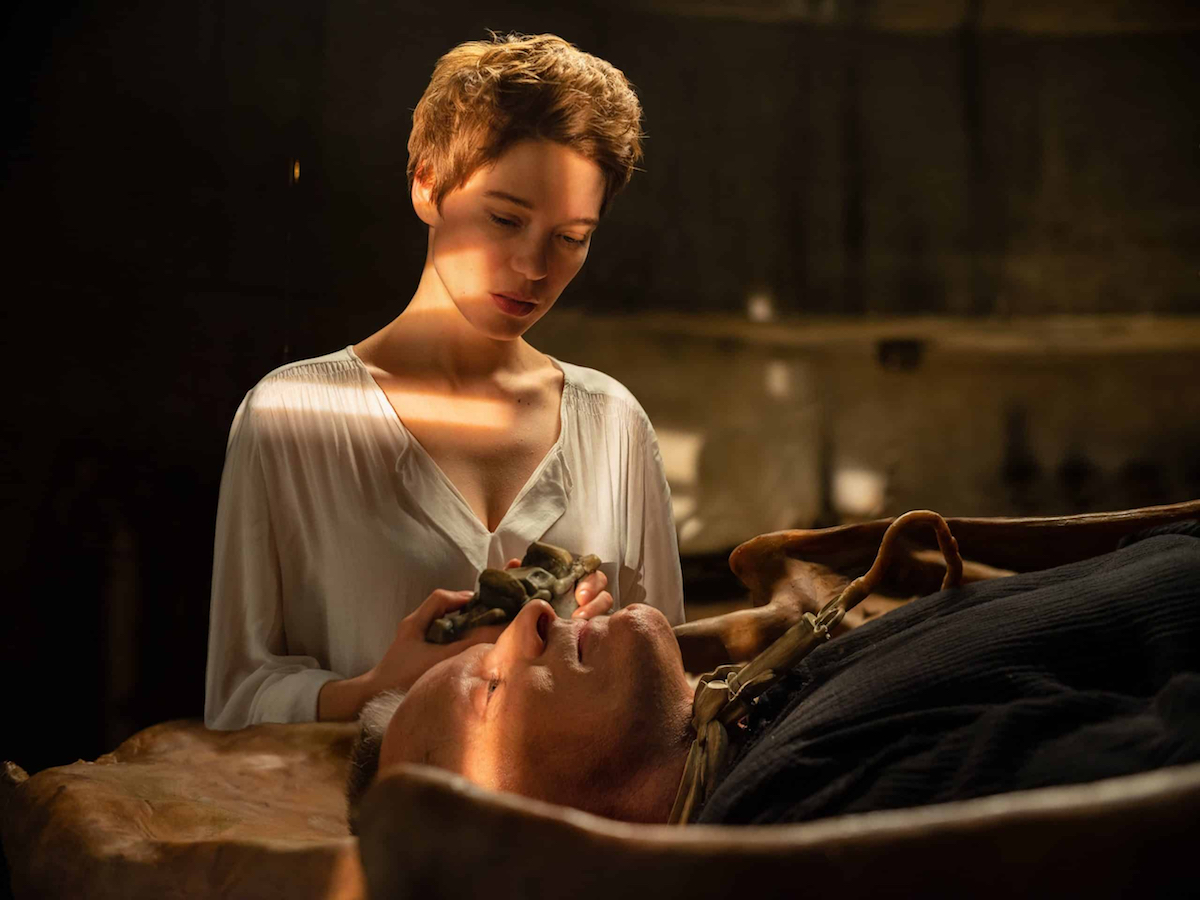

TOP FILMS OF 2022 IN NO PARTICULAR ORDER
-----------------------------------------------------------
Gaspar Noé "Vortex" (France)Charlotte Wells "Aftersun" (United Kingdom)
Brett Morgen "Moonage Daydream" (United States)
Luca Guadagnino "Bones and All" (Italy)
David Cronenberg "Crimes of the Future" (Canada)
Andrew Dominik "Blonde" (United States)
Claire Denis "Stars at Noon" (France)
Joanna Hogg "The Eternal Daughter" (United Kingdom)
Albert Serra "Pacifiction" (France/Spain)
Michelangelo Frammartino "Il Buco" (Italy)
Alejandro Iñárritu "BARDO, False Chronicle of a Handful of Truths" (Mexico)
Edward Berger "All Quiet on the Western Front" (Germany)
Mia Hansen-Løve "One Fine Morning" (France)
Bruno Dumont "France" (France)
Sebastien Meise "Great Freedom" (Austria)
Marie Kreutzer "Corsage" (Germany)
Jerzy Skolimowski "EO" (Poland)
Park Chan-wook "Decision To Leave" (South Korea)
Alessio Rigo de Righi & Matteo Zoppis "The Tale of King Crab" (Italy)
Mia Zetterling "Four Films by Mia Zetterling" Restored Rereleased (Sweden)
Mark Jenkin "Enys Men" (United Kingdom)
Todd Field "TÁR" (United States)
Lucile Hadžihalilović "Earwig" (France)
Olivier Assayas "Irma Vep 2022" (France)
Panos Cosmatos "The Viewing" Short (Canada)
For decades this annual entry has acted as an overview of music, dance, theatre and performance art attended, films seen in the cinema, visual art exhibitions and fairs, festivals covered, and international and domestic destinations traveled. Due to the ongoing effect of the global coronavirus pandemic, this year's overview will again be somewhat limited in scope. While now in its waning phases, its effect on cultural and social life is still a dominant factor. Businesses and cultural venues have limited hours, close early on weekday and weekend nights, and continue to program with a reduced scale and truncated durations over what we saw in the years preceding the pandemic. Even the most rudimentary of social meeting spaces such as cafes, bars and restaurants continue to have reduced hours. The once essential component of urban social life in the Northwest, the cafe, has been particularly hard hit. With many of them no longer offering evening hours. Regionally, arts venues and cultural institutions returned to in-person programming in fall of 2021, cautiously opening the doors to music stages, galleries and movie houses. After a year and a half of navigating the complexities of the pandemic restrictions and closures, programming returned in August and September to the majority of these Northwest culture spaces. In many cases their future remained uncertain until relief funding became available just earlier that year with the benefits of the Save Our Stages Act, alongside the newly implemented Shuttered Venues Grant. The benefits of the various pandemic relief bills, alongside regional infrastructure like the 4Culture Relief Fund, awareness efforts like the Washington Nightlife Music Association, crowdfunding and philanthropy like the ArtistRelief, ArtsFund grant, and GiveBig Washington, all came in the 11th hour for many of our regional cultural institutions and art venues.
Overseas, the European continent has rebounded in a more decisive and assertive way, with the major festivals and exhibitions returning to both bold, and pandemic conscious, in-person programming. One can clearly see the nature of commerce, and social and cultural life at all the hours that one can imagine them transpiring, have made a more lively and vital recovery from the pandemic. This was evident in traveling overseas for the first time in almost three years to attend the once-a-decade confluence of Germany's Documenta, and the Venice Biennale. This year's particular convergence of the two offered a complex set of groundbreaking firsts, as well as an unexpected set of socio-cultural setbacks. With the initial launch not going to plan, Documenta 15 found itself in a set of novel complexities, being curated by a leaderless collective, there was a "The Bumpy Road to a Group-led Documenta”. In many ways the exhibition was a success, “Welcome to the Fun House! Sharks, Skaters, and Smelters liven up Documenta 15”, yet it found itself at the center of a wider discussion and controversy, "Documenta Was a Whole Vibe. Then a Scandal Killed the Buzz". At the close of September, there was much discussion about the resulting impact, and wider considerations to the exhibition, some even speculating, "The World’s Most Prestigious Art Exhibition Is Over. Maybe Forever.". The 59th Venice Biennale was afflicted by no such troubles. This year’s big group show, "The Milk of Dreams", curated by Cecilia Alemani, took its title from an early 20th century fairytale by the British-born Leonora Carrington. The era was also at the heart of the concurrent surrealism blockbuster at the Peggy Guggenheim Foundation in Venice's Dorsoduro. Including the 56 national pavilions and over 30 collateral events, the resulting citywide exhibition produced a smorgasbord of late-flowering surrealism. In what was being called the women's Biennale, this year's exhibition was an exuberant set of, “Cyborgs, Sirens, and a Singing Murderer: The Thrilling, Oligarch-free Venice Biennale”. In an almost singular historic moment, with the world recovering from the pandemic, and the Ukraine being pummeled by Russian missiles, there was no shortage of, “Looking Inward, and Back, at a Biennale for the History Books”.
Returning home domestically, life was reduced again to grappling with the larger part of one's existence being spent in our homes these past two years. While there are now opportunities again to engage with film, music and visual art, as a culture we are still relying on online resources more than was necessary pre-pandemic. Yet these deliver only a modicum of the sensations, social engagement, and sensory thrills and satisfactions of cultural happenings. The pragmatic response would be to accept the inherent losses and embrace what vestiges of a cultural life that could be salvaged online. Yet these are poor surrogates, even temporarily. So, while its role may be reduced in the age of streaming, the magazine, both print and digital, can still be a defining tastemaker amid the multitude of channels in which to discover new music. For those not finding compelling sounds via their internet trawls, digital retailers like Boomkat, and online institutions like The Quietus, represent the kind of expertise you’ll not find coherently brought together online outside the framework of such vision and curatorial legacy. Evolving right along with the times from a free improv, modern classical and jazz magazine in the 1970s and 1980s, in the following decades The Wire expanded its scope to include every imaginable genre (and some yet invented), becoming all-inclusive by the conclusion of the 20th century. A particular advantage at year's end, is that the magazine offers the opportunity to Listen to The Wire Top 50 Releases of 2022. Similarly, film institutions like those below offer a worldly scope, compiling the life’s work of people who have made watching their enterprise. Year in and year out again, Sight & Sound, Film Comment, Cinema-Scope, Criterion Collection's The Current, and The Guardian's excellent film coverage have brought focus to the year of moving pictures from around the globe.

